Ethos & Practice
Your family extends far beyond your own kind.
You and the tree you climbed with scraped knees and complete trust descend from a common ancestor that lived well over a billion years ago. Across that immense span of time, the two lineages have diverged, yet both retain related genes that perform some of life’s oldest and most fundamental tasks.
Shared ancestry, however, is only one thread of the kinship between us. Say forest, and your mind probably summons trees. But a forest is not simply a collection of trees—or even of species. It is what countless lives make possible for one another. Nothing within an ecosystem becomes itself alone.
The image of humanity above or apart from the rest of creation fits such a world poorly. Yet it is precisely this deeply ingrained idea that reduces a forest to trees, trees to timber, water to a resource, animals to pests or livestock, and land to property.
The ecological crisis is both material and relational. It is driven by a system built on extraction and endless growth, but such a system is easier to sustain when the living world is kept at a moral distance. Children growing up today come to take a windscreen almost empty of insects as their measure of abundance. Exhausted soils and diminished waters become the ordinary world against which all future change is judged.
To meet the earth as kin is not to imagine that we can live without taking. The question is how we receive, how much we ask for, and what we offer in return.
Reciprocity begins by allowing the other to answer. To ask permission is to make room for refusal—and to let that refusal alter what we do. Restraint becomes a form of care: a flower left rooted, a patch of ground spared our footprints, the coordinates of a breathtaking place withheld. Wild places should not have to bear the full weight of our desire to see, share and be seen in them—nor our compulsion to leave a mark.
Root & Antler cannot mend this rupture. But it can hold open questions from which another way of relating might grow.
What do we need to unlearn to meet the wider living world as kin?
How do we learn to read welcome and refusal in lives that do not speak in our language?
What are we willing to relinquish in the name of reciprocity—convenience, access, profit, or certain claims we have come to regard as rights or freedoms?
How do we live as active participants in the relationships that sustain us—and allow our accountability to shape the choices we make each day?
Code of practice
How we create something matters as much as what we make.
The principles below translate our ethos into practice. They are commitments rather than claims of purity, guiding how we enter, gather, photograph, create, share and leave.
1. Guesthood
Because we are family, we enter as guests.
Every wild place is already home to lives other than our own. We move through it with the humility of a guest: carrying out everything we bring, treading lightly and staying on established paths wherever leaving them could cause harm. During breeding and nesting seasons, we pay particular attention to distance, noise and signs of disturbance. If our presence causes an animal to stop feeding, hide, retreat or repeatedly watch us, we have come too close. Some sanctuaries are best honoured by not entering at all.
2. Reciprocity
We do not enter only to receive.
We bring something of our own: water during a drought, a poem, a song or an act of care. The gift is neither payment nor permission. It is a way of entering a relationship without arriving empty-handed.
We use only what has fallen or grows in abundance and we always thank the being that has given itself. We learn which species are endangered or protected, never uproot a living plant, take no more than we need and leave plenty for those who come after—human and more-than-human alike.
Before we gather or make art, we pause and attend to what is present. Abundance may permit what scarcity refuses; breeding season may close what was open before. A plant growing plentifully may offer what a single flower in a sparse stand does not. We ask the place before we take anything. When we cannot read the response with confidence, uncertainty itself is reason to leave things as they are.
3. Witness over Capture
From reciprocity grows our photographic stance.
We seek to look with the living world, not merely at it. Knowing the location of a badger sett does not entitle us to wait at its entrance with a camera. We do not pursue wildlife, disturb nests or breeding sites, use food or recorded calls to attract an animal, or stage an encounter for a photograph. If obtaining an image would compromise the peace or well-being of another being, we let the image go.
A photograph is not a trophy. It is the trace of a relationship.
4. Privacy & Restraint
Often, the most respectful thing is to do less.
We protect and advocate for what we love. but care is measured not only by what we do, but also by what we choose to withhold. We do not geotag, or reveal the precise locations, we don’t share where nests, dens, or rare and vulnerable species can be found. When visibility could place a location or its inhabitants at risk, we delay sharing an encounter or keep it private altogether. Not everything we witness needs to become public.
5. Truthfulness
Witnessing requires the refusal of manipulation.
Every photograph makes a claim about what occurred. Our photographs are neither retouched nor manipulated. We do not add or remove elements, replace skies, combine separate moments, relocate animals or reconstruct what occurred before the camera.
Only photographs prepared for print may receive minimal technical adjustments to account for the difference between light emitted by a screen and light reflected from paper. These adjustments do not alter the image; they are made solely so that the print remains as faithful as possible to the original photograph.
What you see is what was there.
6. Impermanence
We honour the cycles of return.
Creating Land Art has become a ritual—a way of responding to what we encounter in the world around us and within ourselves. Gratitude, wonder, grief and remembrance all have a place within the practice. Through Land Art, we offer thanks to a place, honour a life that has ended or acknowledge a transition that might otherwise pass unnoticed.
The art fulfils its purpose without being photographed or shared. But when it travels beyond the place where it began and invites others into closer attention, that, too, is a form of giving.
We mainly create with organic materials found on-site—already fallen or growing in abundance—or with plants we have grown ourselves. We do not uproot or injure wild beings for the sake of a work, consider carefully any foreign materials we introduce to a place, and remove anything that could disturb or harm to an ecosystem.
Weather, animals and decay are free to alter or dismantle what we have made.
Impermanence is part of the work; learning to let go is part of the practice.
A Different Kind of Making
This didn’t begin with a plan.
No roadmap, no strategy, no five year plan —
just a restlessness under my ribs,
and silence thick with listening.
Root & Antler came into the world the way
stag slips through trees:
slow and by its own will.
It came from walking for years.
From worn boots and blistered skin,
from grief that devoured me like a wild animal,
unbidden and fierce,
from images and stories that wouldn’t let me sleep.
Not the kind you pour into books
The kind you carry.
What gathered me wasn’t tidy.
It was rain-slick and it hummed at the edge of language.
Root & Antler became the place
I laid those things down.
Not as proof.
As prayer.
This isn’t a portfolio, though there are images.
Not a journal, though stories live here.
Not a gallery, though art is displayed..
This is a kind of underworld dwelling —
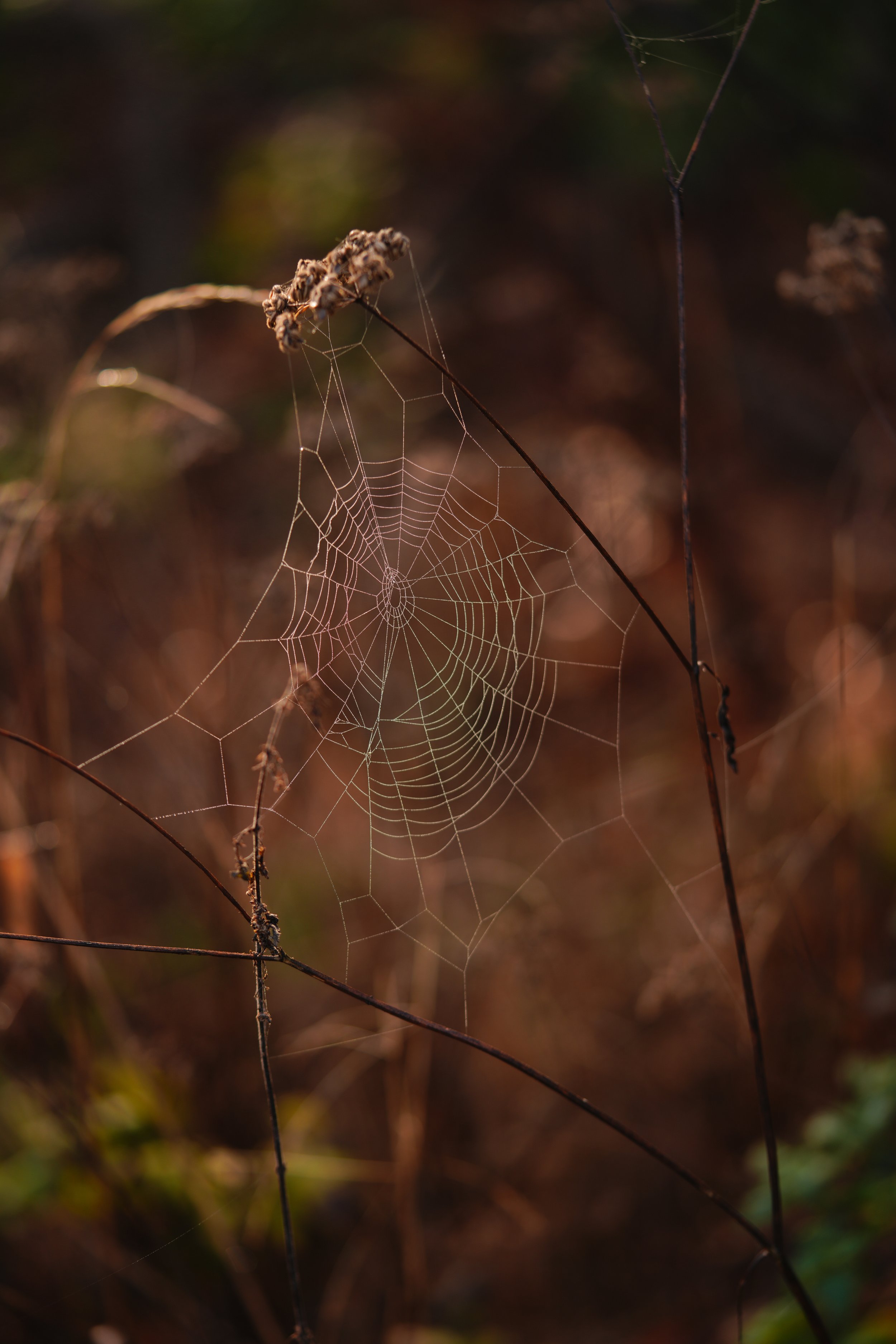
part hearth, part hollow, part web.
A place where old memory curls like smoke.
Where myth stirs the ash.
The stories aren’t told to explain.
The photographs aren’t made to impress.
The artworks aren’t made for humans.
All of tihsemerge like sap — slow, sticky, and full of something older than understanding.
The ethos is simple:
Let beauty ache like a wound that will not heal.
Let questions breathe like smoke rising into the night.
Let the wild remain unclaimed, unbroken, and free.
This isn’t something to consume.
It’s something to return to.
To kneel beside.
To be changed by.
A threshold.
A weaving-place.
A trail back.
A fire kept just barely lit—waiting for you.
It didn’t begin as a project. It began as a listening.
A listening so deep it rearranged the furniture of my days.
It began underground, like many true things—
not with a plan, but a pressure in the chest.
A thrum in the blood.
A pull toward something older than language,
wilder than maps.
For years I had an ache in my chest I couldn’t name.
It lived there like an inverted mountain, vast, unmovable, pressing.
I tried to outpace it with work, with comfort, with routine, with distraction,
all the clever scaffolding of a well-designed life.
But my ache didn’t care for cleverness. It wasn’t interested in convenience.
It had the weight of something sacred, and it pressed until I listened.
So one day, in my thirties, I left.
Citygrids and fluorescent nights, schedules and sidewalks,
and the perfectly organized golden cage I’d made of my days.
I left all of what made sense to anyone watching,
and walked into the wide-bellied wild.
Into places vast enough to cradle me
and the ache that felt too big for my human body,
too inaccessible for my small mind,
too wild for my domesticated tongue,
and too much to bear alone.
To others, what I was doing looked like escapism.
But I wasn’t running—I was drawing closer.
Befriending the inverted mountain. Learning to live alongside it.
Letting wilderness rub its dirt into my wound.
Returning to something I couldn’t yet see, but knew in my bones.
I walked with questions for many moons and at first, I was stranger to the wild.
Clumsy. Loud. Still full of city's noise. The land didn’t greet me in visions or grand signs.
It answered in its own tongue: cold rain. Mud in the boots. Heat that split the bark. Nights so dark the owls went quiet. I felt utterly lost.
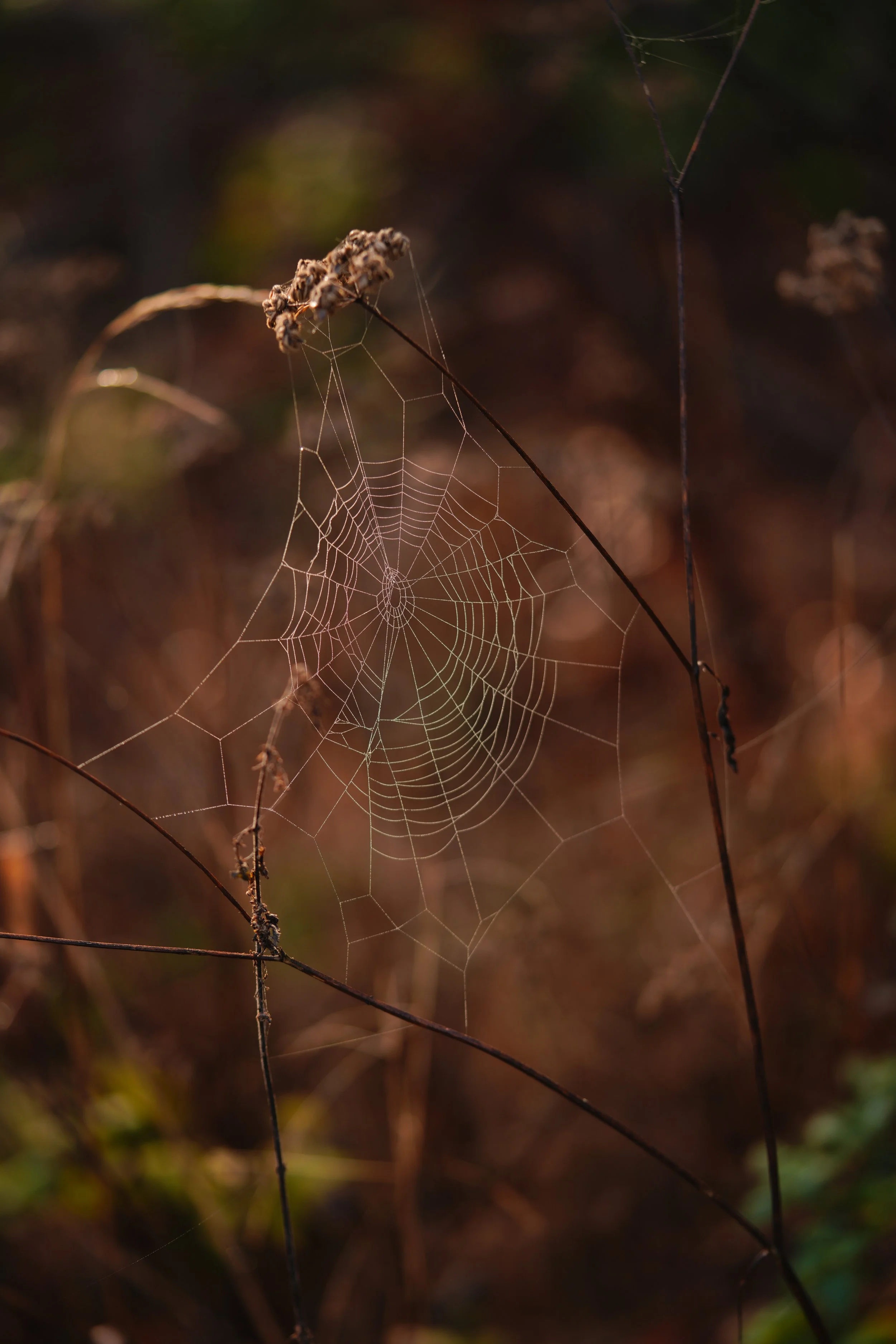
Just very slowly, I began to understand that the ache was a compass. Then I walked slower. I watched more. I sat a day and a half by a wilted yarrow stalk to watch the weaver built her silken web.
The ache didn’t soften—it deepened, settled in. Became a kind of gravity. A teacher.
I read aloud to the trees what I’d scribbled in my notebook.
Made offerings of berries and song.
Somewhere between breath and bootstep, the images and stories began to come.
Not ones I made—but ones I met. Ones that arrived like antlers in snow.
Like roots breaking the frost. Like memory that isn’t yours, exactly—but knows your name.
That’s how Root & Antler began.
Not as a project. Not as a portfolio.
But as a pact.
A living conversation with the wild that’s still going.
A place to lay down what I’ve gathered—and what’s still gathering me.
It’s not polished. It’s not perfect. It’s alive.
It’s where grief curls beside wonder, and both are fed.
It’s a den for the soul-hungry, the earth-lost,
for those who carry a nameless longing or ache.
If you’ve come this far, maybe you’re not lost.
Maybe you’re remembering.
Maybe the ache was never the wound—but the doorway.
And it began, as many real things do, without fanfare.
There was no vision board, no roadmap and no grand plan.
Only a restless ache I couldn’t name, and a silence thick with listening.
A hunger for a language that didn’t live in my mouth yet,
only between my ribs, and in my feet.
This is why I started walking.
This place here isn’t a gallery. It’s not a journal or a portfolio, though it may look a little like each. It’s a kind of underworld dwelling—part hearth, part hollow, part web spun from image, earth, myth and marrow.
It was already there—half-covered by leaves,
tucked beneath years of forgetting.
I found it the way you find a path in dusk:
by feel more than sight.
It began not with a vision, but with hunger.
For silence. For the scent of pine.
For a language that didn’t live in my mouth yet,
but in my ribs, in my feet.
Root & Antler is not a project.
It’s what happens when you start listening again.
To the moss, to the wind, to the ache.
To stories that were never written down,
but live in stones and storms and sleep.
There’s no neat shape to this place.
It’s part hut, part howl.
Part altar and part ash.
I lay down what I’ve gathered here—
images caught like dew in the early light,
words spoken to the dark.
And I let them belong to something larger.
This isn’t about answers.
It’s about the slow courtship of mystery.
It’s about remembering how to walk in such a way
that the land might still trust you.
If you’ve ever wept at the sight of a raven.
If silence feels more familiar than noise.
If part of you never left the forest—
Then you’re not a visitor here.
You’re returning.
Take off your shoes.
Let the web catch you.
Let the story rise in your chest
like smoke from the coals.
You’ve come to the right place.
We’re taught to hammer things into names
to sort everything into neat boxes.
but not everything was born for the cupboard or the glass case.
Some things buckle under names.
They need wind between their ribs.
They need to ache in the marrow.
They need to knock through the soles of your feet like drum-skin thunder.
You could call it a gallery, a journal, a portfolio.
But that just looking through the keyhole.
The hearth is deeper in.
Root & Antler is more underworld than website
A den beneath the frostline,
a fire with ash that remembers,
a web spun of image and earth and myth and marrow.
It’s where I lay down what’s gathered me—
the ragged glints, the ache-shaped whispers,
what I’ve followed like a blood-warm thread through the dark woods of becoming.
This is not a space of answers.
It’s a shelter for questions that have grown too wild.
A place where grief and wonder warm their backs at the same fire,
and no one dares to make them speak before they’re ready.
If you’ve ever wept at beauty with no reason but the ache,
if the cry of a crow in rain sets your ribs ringing,
if the scent of pine makes you yearn like a lost child at the threshold—
then come closer.
Closer still.
We might have sat at the same fire, once..
There is space here for the part of you
that never stopped longing.
The part that kneels without needing words.
The part that still hums the old songs,
even if all that’s left is the echo in your bones.
Root & Antler won’t feed you like a scroll.
It asks you to return.
To step in.
To be remade by its weather.
A threshold.
A weaving-place.
A way back.
A fire kept just barely lit—
waiting for you to arrive.
We are taught to name and hold things tight—to sort everything into neat boxes.
That I feel the need to find words for this place
comes from that same teaching.
It would be the easiest to call it a gallery,
a journal, a portfolio, a project.
But none of that would hold the truth.
Those words would shrink what gathers here
into something the mind can manage—
when it was meant to be carried by the heart.
Or better yet, felt in the soles of your feet.
So instead, I ask you to hold it this way:
Like a half-buried altar in the woods.
A lean-to spun from lichen and smoke.
A hush that listens back.
A weave of silence and story, catching the light.
Root & Antler didn’t begin with a vision board. Or a strategy.
It began with blisters. With weather, with walking.
With worn boots and a heart bruised open by wonder.
It grew from standing still long enough to hear the land speak back.
From the moment when fog moved like breath and made my ribs ache.
It grew from the act of noticing.
This is where I lay down what I’ve gathered—
and what still gathers me.
Here, images grow wild and words take wing.
It is not a place of tidy answers, but you may find companions in the questions.
A kind of soft-footed seeking,
A courtship with the unsayable.
A vow to move through the world
in such a way that I am not the loudest thing in the forest.
This is wound and whisper,
the weathered offering of someone
learning to live in right relationship again —
with land,
with mystery,
with the ache that refuses to be silenced.
If your heart stirs with the scent of moss and rain,
if silence feels like home and the dark knows your name,
then stay.
Let the old ache rise. Let it name you kin.
Because some part of you never left the forest.
It’s time to come back.